How AI Is Reshaping the U.S. Job Market: Opportunities and Challenges
Explore how artificial intelligence is transforming the U.S. job market, creating new opportunities while reshaping careers, skills, and industries.
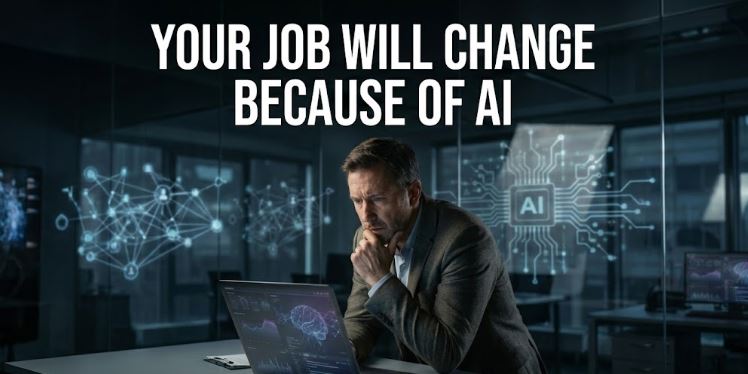
Artificial Intelligence is no longer a distant concept—it is already changing how Americans work, hire, and build careers. From automating repetitive tasks to supporting smarter decision-making, AI is reshaping the U.S. job market at a pace few expected.
While concerns about automation and job displacement are real, AI is also opening doors to new roles, industries, and ways of working. The key question is no longer whether AI will impact jobs—but how workers and employers can adapt to it.
Let’s explore both the opportunities and challenges AI brings to the U.S. workforce, and what it means for the future of work.
Opportunities AI Is Creating in the U.S. Job Market

AI is creating demand for entirely new skill sets and job roles. Positions such as machine learning engineers, data analysts, and AI prompt specialists are growing rapidly across industries.
According to recent hiring trends, organizations are increasingly looking for professionals who can work alongside AI tools—not just build them. In healthcare, AI helps doctors analyze medical images faster and more accurately. In finance, algorithms detect fraud in real time. Retailers use AI-driven chatbots to improve customer support and personalization.
Companies are also benefiting from AI platforms like IBM Watson, which assist with data analysis, forecasting, and automation. These tools allow businesses of all sizes to operate more efficiently and compete in a digital-first economy.
Beyond technical fields, AI is expanding opportunities in creative and strategic roles. Writers, marketers, and HR professionals use AI to streamline tasks, freeing time for higher-value work such as strategy, creativity, and human connection.
Challenges AI Brings to the Workforce

Despite its advantages, AI introduces serious challenges—especially for workers in routine or repetitive roles. Automation threatens certain jobs in manufacturing, retail, and administrative support, increasing concerns about job security and income inequality.
Another major issue is the skills gap. Many workers feel unprepared to use AI tools effectively, while employers struggle to find candidates with the right mix of technical and soft skills.
Ethical concerns also play a growing role. AI systems can unintentionally reinforce bias if trained on flawed data. Employee monitoring technologies raise privacy concerns, particularly in remote and hybrid work environments. These challenges highlight the need for responsible AI adoption, clear policies, and transparent governance.
“AI is not here to replace people—it’s here to change how people work. Those who adapt will thrive.”
Key U.S. Industries Being Transformed by AI
AI’s influence spans nearly every major industry in the U.S.:
Healthcare
AI assists with diagnostics, treatment planning, and administrative efficiency. Solutions developed by organizations like Google Health help detect diseases earlier and support medical professionals with data-driven insights.
Finance
Banks and financial institutions use AI to analyze contracts, detect fraud, and automate risk assessments. Firms such as JPMorgan rely on AI systems to reduce manual review time and improve accuracy.
Education
AI-powered platforms personalize learning experiences, automate grading, and support virtual education—allowing teachers to focus more on student engagement.
Manufacturing
Predictive maintenance and intelligent robotics help manufacturers reduce downtime and improve efficiency. Companies like General Electric use AI to monitor equipment performance and prevent costly failures.
How Workers and Employers Can Adapt to an AI-Driven Market
Thriving in an AI-powered job market requires proactive effort from everyone involved.
For Workers
- Learn basic AI concepts and tools
- Develop technical skills like data analysis or automation
- Strengthen human skills such as problem-solving, communication, and adaptability
Platforms like Coursera and Udemy offer accessible ways to build AI-related skills.
For Employers
- Invest in reskilling and upskilling programs
- Encourage responsible and ethical AI use
- Foster a culture of continuous learning and innovation
For Policymakers
- Support workforce development initiatives
- Encourage ethical AI adoption
- Ensure protections for workers affected by automation
Useful Resources to Get Started with AI
Here are a few practical tools and platforms helping professionals explore AI today:
- TensorFlow – Build and experiment with machine learning models
- Hugging Face – Access ready-to-use NLP and AI models
- DataCamp – Learn AI, data analysis, and programming interactively
- IBM Watson – Apply AI solutions in real business environments
Final Thoughts
Artificial Intelligence is reshaping the U.S. job market—but it is not eliminating the need for human talent. Instead, it is redefining how skills, creativity, and adaptability are valued.
Workers who invest in learning and employers who embrace responsible innovation will be best positioned to succeed. The future of work will belong to those who understand AI—not fear it—and know how to work alongside it.